- AI
- Marketing Strategy
How Our Team Uses AI in Marketing, and Where We Don’t
Four people at MtoM on where they land on AI at work: efficiency, ethics, creative work, and the everyday tasks it actually changes.
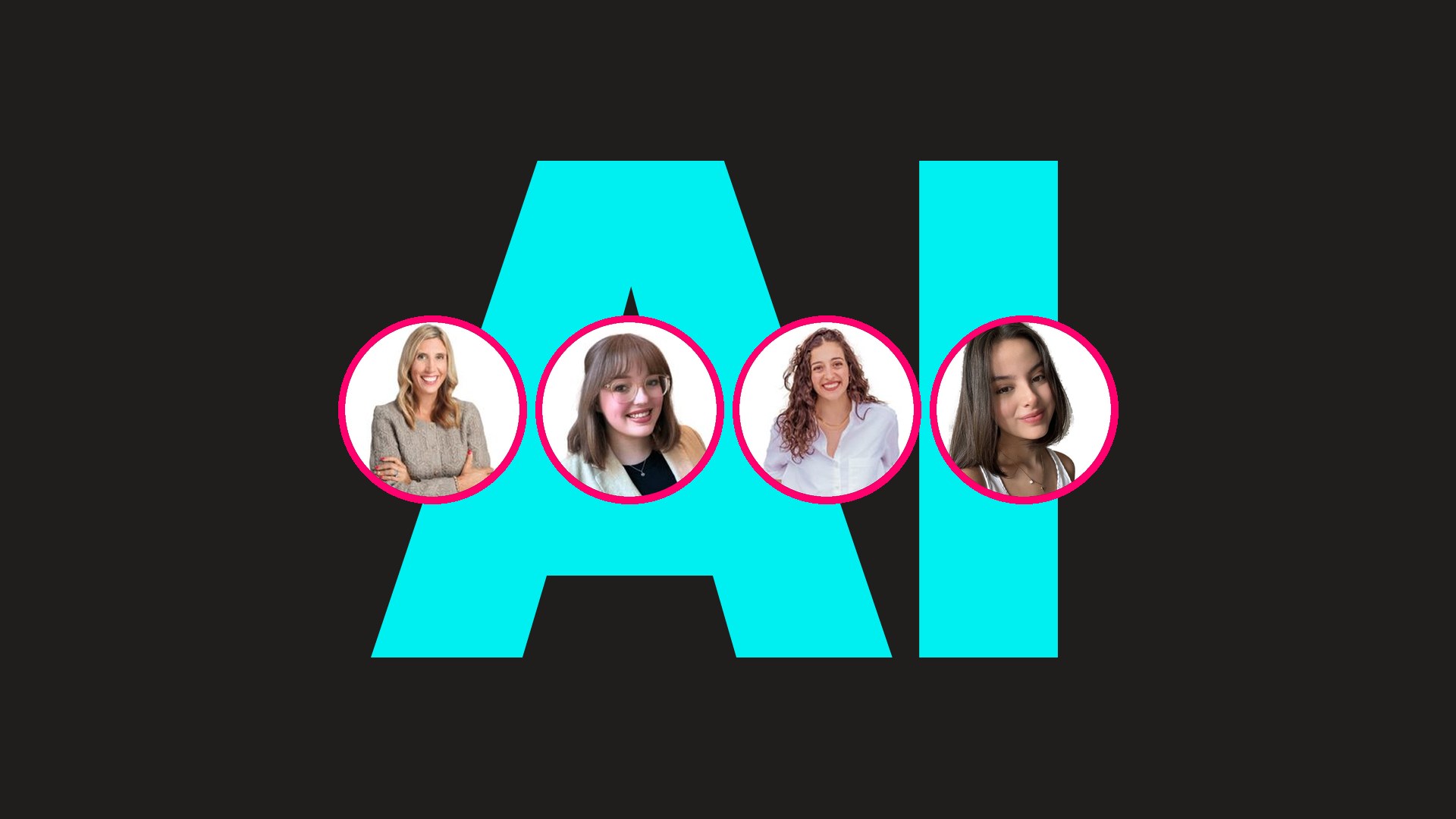
 Written by Christine Wilson, Founder & CEO
I’ve had so many interesting conversations about AI over the past few months with clients, coworkers, and friends. I’ve always loved technology, and I’ve enjoyed adding platforms to our tech stack that make our work more efficient and our agency more capable. Claude is the most exciting tool I’ve seen yet, and it has me thinking big about what a small digital marketing agency can do. What has intrigued me is how reluctant so many people are to use it, and in my experience, the younger the person, the more reluctant they are to bring it into their work. It turns out that isn’t just my circle: Gallup found that younger workers are among the least frequent AI users on the job, while use among leaders has tripled since 2023. Meanwhile, people my age who spent their careers coming up with great ideas they couldn’t execute, because they couldn’t code or design, feel empowered for the first time. Friends running businesses in lobbying, consulting, and law have told me they always wanted to build their own website, write their own proposals, or design their own logo, and now they can. They’re excited to finally put their ideas into action. I think the hesitancy and concerns deserve to be taken seriously, but I wonder how employers will handle a younger workforce that’s wary of the tools, especially since Gallup also found that young employees who use AI see bigger gains than older users, and that adoption jumps when managers actively support it.
This post is an exercise in exploring this topic with my team, since we have a range of ages and interests in using AI in our work and in our personal lives. I think the varying viewpoints are fascinating, and it will be interesting to see how this plays out over the coming years.
The Business Owner’s View: Efficiency Is the Real Risk
When people tell me they don’t trust AI, I understand where the concern comes from, but I think some of it rests on a misunderstanding of how it’s actually used. Using AI to learn how to do something is no different from Googling it or watching a YouTube tutorial. If I ask Claude to walk me through editing a WordPress template or setting up a conversion event in GA4, nothing about that produces “AI slop.” I’m learning, and then I’m doing the work. The same goes for code. AI-generated code is just code. Once it’s written and tested, it runs on its own, without AI, exactly like code a developer typed by hand.
As a business owner, the risk I worry about isn’t AI; it’s efficiency. Tasks that take an AI-fluent employee minutes can take someone else hours, and that gap gets priced in. If an employee can’t keep pace with the workload, the employer’s choice isn’t whether to use AI. It’s whether to hire a second person or bring in an agency to cover what isn’t getting done. Large companies face the same math at scale, with a generation entering the workforce wary of the tools. The same logic applies to agencies. Clients compare what they get for their budget, and I don’t know how long agencies that refuse to use AI will be able to compete on speed, price, and depth of work with the ones that do.
Data analysis is the clearest example of what has changed for us. For most of my career, marketing decisions were made on gut instinct and a handful of data points: an open rate, a cost per click, maybe some website traffic. Now we can take 12 or more data points across paid media, organic social, email, search, website behavior, and CRM records and synthesize them into a coherent picture of the customer journey. That kind of analysis used to take days, if it happened at all. It doesn’t replace judgment; it gives our judgment a lot more to work with, and our clients get better recommendations because of it.
There’s more to the generational story than reluctance, though. Gallup’s surveys of Gen Z show rising anger and falling excitement about AI, and other research finds that young workers hide their AI use because they’re afraid of being judged for cutting corners. That tells me the reluctance is as much a leadership problem as a generational one. If younger employees see bigger gains when they do use AI, and adoption jumps when managers actively support it, then it’s on employers like me to make it safe to experiment, set clear expectations, and teach people how to use these tools well.
Who Pays the Price of AI?
 Written by Chloe Fischer, Senior Digital Strategist
In the digital age, we’ve seen firsthand how powerful technology outpaces the rules meant to govern it, from data privacy scandals to multibillion-dollar FTC settlements. When a new technology arrives with big promises and very few guardrails, I want to know who’s paying the metaphorical bill.
So far, the highest costs of the generative AI boom have fallen on people most users never see, including content moderators in the Global South. One of the most disturbing pieces of reporting around generative AI came from a 2023 Time magazine article delving into the working conditions of content moderators at a firm OpenAI contracted. For around $2 an hour, Kenyans working for that outsourcing firm were tasked with reviewing text and images depicting extremely graphic content. As a result, workers have reported lasting psychological harm.
None of this shows up when you type in a prompt, and the companies behind it have largely avoided accountability. Just as with privacy on social media, the U.S. has no comprehensive federal law protecting people from the fallout of this unchecked growth. Many of these companies have already shown they’re willing to put profits over people; why should we expect a different outcome with generative AI?
Distrust doesn’t always mean a complete refusal to try new things or find new efficiencies; it can look like using these tools deliberately to protect the creative process, our environment, and our clients’ data. I encourage marketers of all ages to be selective about which platforms we trust, protect human creators, and push vendors toward better labor and environmental practices.
Finding a Balance Between AI and Creative Work
 Written by Courtney Brewer, Senior Marketing Director
As a marketer, you can feel pulled in different directions when it comes to using AI. On the one hand, you have a movement of people online rebuking “AI slop” and proudly promoting their non-AI’d work; in a field that is driven by creativity, I can understand this criticism. On the other hand, you don’t want to fall behind in today’s fast-paced work environment, and if something helps to lighten the notoriously heavy agency workload, then I can empathize with that too.
My humble opinion, as with most things in life, is to find a balance that works for you. I find AI to be immensely helpful in understanding my clients’ performance data and reports. You can gut check yourself and uncover insights you may not have seen otherwise. It can pull together in-depth analyses, trends, and recommendations faster and more effectively, and I have found it to be accurate in most instances. I didn’t become a marketer to be a data analyst; it’s part of the job, of course, but not my favorite part. So having AI not only expedite the process but deliver insightful analysis allows me to focus on other parts of my job that I really love.
On the creative side, I still very much find enjoyment in creating graphics, videos, and writing copy for my clients when I get the chance. It allows me to exercise a different part of my brain, and I find great enjoyment in that. I have not found AI to surpass our team from a creative standpoint, but what it can help to do is storyboard your ideas so the creative process can feel a bit more streamlined. Let’s say, for example, you captured a full day of content for a client. Instead of sifting through hours of footage, you could give AI a prompt to pull out the best clips and propose various storyboards with specific time stamps, and from there you could create a handful of videos in half the time while still leading the creative vision. Similarly, if you have a client that is not on board with a content shoot (I have several), you could prompt AI to provide you with specific stock footage and weave that into the assets you already have.
I suggest experimenting with AI throughout your day-to-day tasks. See what it gets right, and see where it falls behind. If it can lighten the load of the “busy work” you don’t look forward to, then you can focus on and strengthen the skills that you love. It doesn’t have to be an all-or-nothing approach; tailor it to fit your needs.
What AI Actually Changes in Our Work Week
 Written by Carmen Echeverria, Digital Strategist
“AI” stands for artificial intelligence, but it means something different to everyone who hears it. For one person it’s a chatbot, for another it’s low-effort “slop” in their feed, and for others it’s a headline about jobs being replaced. The term is so broad that it can bring up strong feelings before anyone knows which tool is being talked about.
In our day-to-day work, AI is more of an assistant than a replacement. It helps with the repetitive tasks that eat up a week, like reformatting reports, summarizing notes, and drafting first-pass versions of routine copy. That gives us more time for the work that needs a person, like strategy, conversations with clients, and understanding their needs and their audiences’ needs.
Maybe the real question isn’t whether the word “AI” deserves its reputation, but what it takes for people to feel comfortable around it. That feeling is collective; it’s shaped by headlines, by past experiences with technology, and by whether people believe the businesses using it are being honest. As marketers, we can’t change that overnight, but we can be clear about how we use it and where people are still involved.
Where We Land
Reading through my team’s perspectives, what strikes me is that the hesitancy and the enthusiasm come from the same place: caring about the quality of the work. Chloe wants to know who pays the price. Courtney wants to protect the creative work she loves and let AI take on the busy work. Carmen wants people to feel comfortable and to know where a person is still involved. I want our clients to get the most out of every dollar they spend with us. None of those positions is wrong, and none of them gets solved with a quick prompt. A lazy prompt usually produces garbage. The value lives in iteration, in human review, and in knowing your subject well enough to recognize when an answer is wrong.
That’s why MtoM doesn’t treat AI as a blanket rule in either direction. Some agencies now market themselves as anti-AI, and I understand the appeal, but we’d rather use these tools selectively, where they make the work better, and keep people at the center of strategy, creative, and client relationships. Some of our clients actively ask us to use AI in their creative work; others don’t want it anywhere near their brand. That’s a conversation we have with each one, and it’s one we expect to keep having as the tools and the rules around them change.
I’m curious where your team lands. Are your younger staff more hesitant than your senior people, or is it the other way around? Tell us in the comments.
Want help with this? We run AI-powered marketing programs for organizations across the United States.
Book a discovery call →